Bristol Bird Club
The Bristol Bird Club – J Wallace Coffey Chapter TOS / VSO
The Bristol Bird Club was founded in Bristol, Tennessee, Bristol, Virginia (USA) in March 1950 to promote the enjoyment, scientific study and conservation of wild birds.
We generally meet on the 3rd Tuesday of each month. We have both in-person meetings and a Zoom Video option. Our meeting place is in the Ascent Room of The Summit at 1227 Volunteer Parkway in Bristol, TN. The Zoom invitations are emailed to members or guests who request a link.
Our members are from a large area in Virginia and Tennessee. Everyone is welcome to join.
Regular activities include monthly field trips, an annual picnic, banquet and Christmas Party. Additionally, we sponsor three Christmas Bird Counts annually (Bristol, TN/VA; Glade Spring, VA; and Shady Valley/Mountain City, TN). We also sponsor an email listserv called Bristol-Birds that you may join to receive info on recent sightings. To join free listserv, visit https://www.freelists.org/list/bristol-birds and enter your email address next to “User Options: Your email address:”. To finish the process, make sure the action is set to Subscribe and click Go.
Our Team
2026/2027
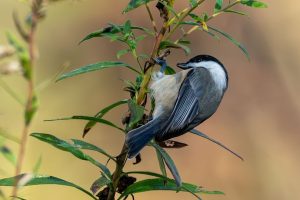
Carolina Chickadee
Photo by Cindy May
About
The Bristol Bird Club is part of the Tennessee Ornithological Society and an affiliate member of the Virginia Society of Ornithology. The club is a nonprofit organization under the auspices of the Tennessee Ornithological Society. The purpose of the Bristol Bird Club is to foster and support scientific study, enjoyment, and conservation of wild birds, including educational activities and to promote fellowship among the membership. The chapter name of the Bristol Bird Club is the J Wallace Coffey Chapter. J Wallace Coffey was a vital member of the club for most of his life. He dedicated his life to the conservation and record keeping of wild birds in the East Tennessee and Southwest Virginia and was the heartbeat of the club for many decades. What is important to our chapter is building our membership in order to continue a leadership role for all things nature. We encourage young birders so that our club will continue to be healthy and active for future generations of birders. We want our club to be active in conservation efforts and a strong membership makes that effort even more reachable. Our club strives to be active and to partner with other local clubs in all types of activities. We have a special interest for programs in our local parks such as Jacob’s Nature Park in Johnson City, TN, and Steele Creek Park in Bristol, TN.
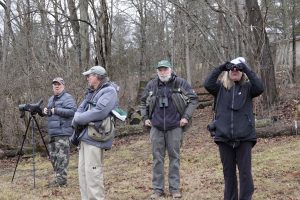
Birders at Steele Creek Park
Photo by Michele Sparks
Meetings
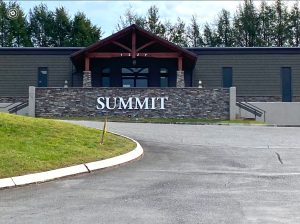
The Summit Building on the Volunteer Parkway (Bristol, TN)
Photo by Michele Sparks
Membership
The period for 2027 membership dues for the Bristol Bird Club is from late fall through the end of February. Dues owed to the TOS are sent by March 31 of each year (TOS membership is $28 per year for single memberships and $32 for family memberships). Ten dollars per year goes to our local (BBC) chapter. The membership fees are for one year, January 1 through December 31.
BBC membership rates including TOS membership:
- Family $32
- Individual: $28
- Sustaining: $40
- Associate: $10
- Student (K-12): $15
- Individual Life: $450 (TOS only)
Please make checks payable to the Bristol Bird Club and send to the BBC Treasurer. You can pay at meetings January – February, but no later than March 15.
Anne Cowan
108 Stonecroft Circle
Bristol, TN 37620
Please include your name, mailing address, phone, and email and make checks payable to the Bristol Bird Club and send your fees to the BBC Treasurer. You may pay at meetings or mail them to the address given above.
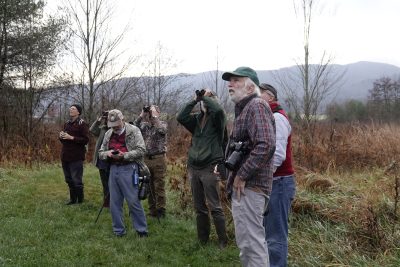
Orchard Bog - Shady Valley, TN
Photo by Michele Sparks
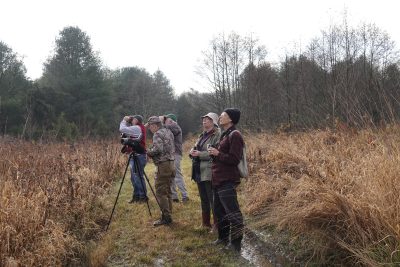
Orchard Bog - Shady Valley, TN
Photo by Michele Sparks
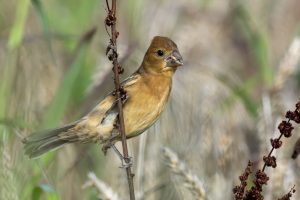
Blue Grosbeak (Female)
Photo by Cindy May
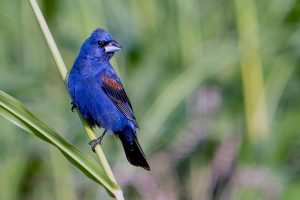
Blue Grosbeak (Male)
Photo by Cindy May
Contact Us
Upcoming Birding Opportunities and Events:
The Bristol Bird Club will be having a field trip to the Miller Farmstead at Roan Mountain State Park on Saturday, Oct 17 at 8:30 AM. We will meet at the farmstead parking area. There is a nice variety of habitats there. Trails will enable us to spend a good amount of time on foot, without ever having to be far from our cars. Shoes will probably get wet. There could be a nice mix of late fall migrants and early winter residents. There could also be spectacular fall colors! I will be leading this trip and plan to stop for lunch in Roan Mountain – Larry McDaniel
Oct 24 we will have our annual field trip to Shady Valley, this year led by Rowan Gray! More info coming soon!
Field Trip Report for Roan Mountain Field Trip With High Country Audubon Society – July 19, 2026
On Sunday, July 19, members from the Bristol Bird Club (Rob Biller, Karl Schneck, and Steve Hanor) and the High Country Audubon Society (Guy McGrane, Debbie Shetterly, Will Pratt, Vicki Wise, Janey Wey, and Anita Clemmer) met to bird Roan Mountain (TN/NC).
Due to low clouds and moderate wind at the Carvers Gap parking area, we began by birding the gap and the lower overlooks—including the Canada Warbler nesting overlooks and Hummingbird Hill—while waiting for the top to clear.
Our sightings at Carver’s Gap included:
– Turkey Vulture (1)
– Downy Woodpecker (1)
– Blue-headed Vireo (1)
– Common Raven (1)
– Golden-crowned Kinglet (2)
– Red-breasted Nuthatch (1)
– Gray Catbird (1)
– Brown Thrasher (1)
– Veery (1)
– American Robin (5)
– Cedar Waxwing (10)
– Dark-eyed Junco (2)
– Common Yellowthroat (2)
– Canada Warbler (1)
– Scarlet Tanager (1)
At the first overlook below Carvers Gap, we found a Canada Warbler and a singing Winter Wren. At the next overlook down, we spotted another Canada Warbler.
We then drove down to Hummingbird Hill, where we found:
– Mourning Dove (6)
– Ruby-throated Hummingbird (2)
– Northern Flicker (2)
– Common Raven (4)
– Carolina Chickadee (2)
– Barn Swallow (2)
– White-breasted Nuthatch (3)
– Northern House Wren (2)
– Carolina Wren (3)
– Gray Catbird (2)
– American Goldfinch
– Chipping Sparrow (2)
– Dark-eyed Junco
– Song Sparrow (2)
– Brown-headed Cowbird
– Chestnut-sided Warbler
– Rose-breasted Grosbeak (3)
– Indigo Bunting
Next, we went to the Rhododendron Gardens at the top. Despite the clouds, we heard two Yellow-rumped Warblers singing from the overlook. Along the Cloudland Trail, we observed a Blue-headed Vireo, two Golden-crowned Kinglets, and two Dark-eyed Juncos.
Returning to Carvers Gap, we walked the Appalachian Trail toward Round Bald and observed Barn Swallows (13), American Robins (4), Cedar Waxwings (3), Dark-eyed Juncos (5), and a Common Yellowthroat.
Near the top of Round Bald, a few participants headed back. However, Guy McGrane, Will Pratt, and Steve Hanor continued further, spotting a Black-throated Green Warbler and hearing a singing Hermit Thrush.
Despite the rain showers and heavy cloud cover, it was a great day on the mountain. While the weather kept our species count lower than expected, it made the birds we did find even more rewarding.
Thank you to everyone who joined the trip despite the grim forecast. Special thanks to Guy McGrane for co-leading the trip—it is always wonderful to see our neighbors from Boone!
Rob Biller
Bristol Bird Club
Soup and Sparrows Field Trip a Big Success
Fourteen birders gathered at the Weir Dam at the head of South Holston River for the Soup and Sparrow field trip. Although only three species of sparrows were found, there were plenty of other great birds found on this trip!
The participants were: Michele Sparks (Leader Extraordinaire), Larry McDaniel, Janet Brown, Roy Knispel, Joe McGuinness, Karl Schneck, Ralph Seaman, Robyn Seaman, Josh Bond, Marion Bond, Cindy May, Scott May, Ben Cowan, and Rob Biller.
List of Birds:
Weir Dam area of South Holston River –
Canada Geese 8, American Widgeon 22, Mallard 6, Redhead 48, Lesser Scaup 2, Bufflehead 58, Rock Pigeon 4, Mourning Dove 2, Great Blue Heron 1, Red-shouldered Hawk 1, Yellow-bellied Sapsucker 1, Red-bellied Woodpecker 3, Downy Woodpecker 3, Pileated Woodpecker 1, Blue Jay 6, Ruby-crowned Kinglet 1, Golden-crowned Kinglet 1, White-breasted Nuthatch 1, Winter Wren 3, Carolina Wren 4, Northern Mockingbird 2, Eastern Bluebird 3, Hermit Thrush 1, American Goldfinch 4, White-throated Sparrow 1, Song Sparrow 1, Eastern Towhee 1, Yellow-rumped Warbler 6, and Northern Cardinal 3
Next we headed to Big Springs Rd in the Hickory Tree area which goes along the part of the Holston River:
Canvasback 1, Greater Scaup 2, Bufflehead 5, Hooded Merganser 5, Common Merganser 2, and about 5 Canada Geese.
Our last stop was at Paddle Creek Pond. I had visited here before the field trip and these are my numbers. Most of the same birds were present when the field trip got there:
Tundra Swan 12, Gadwall 6, American Widgeon 3. Mallard 8, Green-winged Teal 50 (close estimate), Redhead 40 (close estimate), Canvasback 12, Ruddy Duck 2 (I did have 1 American Black Duck on my first visit that we could not find when the group got there.)
**I stopped at another couple of places before the trip started earlier in the morning. I’ll list these next:
Middlebrook Lake (daybreak):
Canada Geese 53, Canvasback 5, Redhead 5, Bufflehead 1, Ring-billed 6
Heron Hollow Pond on Trammel Rd:
Gadwall 5
After the birding part of the day, a small group went to the Soup part of the field trip at the South Holston Ruritan club. I, however, went to my parents house to help Ron Carrico hang high in a tree the Screech-Owl Box that BBC Member Karl Schneck constructed and brought to the BBC Christmas party as gifts to give away. I was one of the lucky winners. I did hear the Ruritan Club was packed and it was very, very good!
Saltville Well Ponds Field Trip Results
3-14-26
Thirteen birders met up in Saltville, VA to bird the Saltville Well Fields near the Helen Williams Barbrow Interpretive Trail. It was a lovely morning along the Trail with 41 species found…made all the bit sweeter meeting leader Bob Riggs and the all fine folks from the area. A complete list of the birds and waterfowl can be found here. Thanks to Rebecca Currin for keeping up with and sharing her eBird list.
We had good birds and great company! Highlight was a migratory Blue-winged Teal (FOS for a lot of us) that Harry Norman found!
Complete list bird list:
41 species
Canada Goose 18
Blue-winged Teal 2
Gadwall 13
American Wigeon 5 2 male, 1 female
Mallard 4
Lesser Scaup 2 Male and female
Common Merganser 2
Rock Pigeon (Feral Pigeon) 21
Mourning Dove 1
American Coot 4
Wilson’s Snipe 8
Black Vulture 21
Turkey Vulture 17
Cooper’s Hawk 1
Red-tailed Hawk 2
Belted Kingfisher 1
Red-bellied Woodpecker 4
Downy Woodpecker 2
American Kestrel 1
Eastern Phoebe 1
Blue Jay 5
American Crow 8
Carolina Chickadee 5
Tufted Titmouse 3
Tree Swallow 20
Golden-crowned Kinglet 2
Carolina Wren 4
European Starling 7
Eastern Bluebird 2
American Robin 22
American Goldfinch 1
White-throated Sparrow 5
Song Sparrow 18
Swamp Sparrow 2
Eastern Towhee 4
Eastern Meadowlark 1
Red-winged Blackbird 32
Brown-headed Cowbird 3
Common Grackle 18
Yellow-rumped Warbler 4
Northern Cardinal 11

A BBC Online Publication of News and Birding Views
Bristol Bird Club Celebrates 75 Years with Tributes
to Club and Wallace Coffey


Janet (Coffey) Godfrey
Daughter of Wallace Coffey
My father, Wallace Coffey, was proud to say he was a bird watcher and would readily tell anyone who would listen that he began learning about birds and joined the Bristol Bird Club when he was 18 years old. That was 1958. He devoted his adult life to various leadership roles in the club and to furthering the growth and success of the organization. My earliest memories were from the late 1970s and include attending the monthly meetings held at Central Presbyterian Church on Euclid Avenue in Bristol, VA. It was quite a formal meeting, held in the church parlor with refreshments like mints and cake and usually included punch served from a glass punchbowl. There was a formal agenda that included business of the club, a financial update, upcoming events, etc. always guided by Roberts’ Rules of Order. In addition to a guest speaker, there was brief segment given by a member called “Bird of the Month” (I presented information about a Cardinal once–I remember drawing a picture for that meeting and I’m quite certain that was hilarious to the members, but they were ALWAYS very kind and respectful to me as a child of less than ten years old). I fondly remember several members from those early days including Judge Joseph Cantwell and his wife Anna, Bert and Lorraine Hale, their son Ken Hale and his wife Cindy and Imogene Fortner along with her brother Jim Jack Hickam and sister Edna Ruth Horne. My Dad and I would visit Mrs. Ruby Reynolds and CT (Con) and Helen Ottenfeld at their homes as they were older and no longer able to attend meetings. As I grew older and had more homework and extracurricular activities, my meeting attendance became less frequent, but I will always remember the kindness shown to me by the BBC members.
Later in life, my Dad became more and more focused on furthering the legacy of the club and ensuring its growth and continuation into the future. I left Bristol for college in 1990 and my memories become more infrequent but Dad placed lots of emphasis on welcoming new members, mentoring youth and young adults who were interested in birds and planning events and field trips that would be of interest to the club members. He was gifted with new and interesting ideas for ways to improve the club and could usually rally members and friends to help make turn those ideas into reality. Truly, the members of the Bristol Bird Club were some of the best and most loyal friends to my Dad and my mother, Carolyn, throughout their lives.
Kenneth Hale
Past BBC Member
I was 14 at the time when I stumbled upon a little creature running around in the road. Called a fellow named Wallace Coffey and told him about the critter. Wallace sent Brent Rowell to our home to take a look who identified the tiny mammal as a Least Shrew. Brent realized I had an interest in the outdoors, reported that to Wallace and our friendship began.
Wallace introduced me to ornithology, and in particular raptors. For several years, Wallace and I trapped and banded the ver 100 raptors in Sullivan county, including Great Horned Owls, Kestrels, Screech Owls, and even a Rough Legged Hawk. Our “best day” was a dreary raining day and we were out looking for kestrels. We saw 10 kestrels, caught 10, banded 9 and the other was a recapture from a previous encounter with us. We captured a kestrel banded in Pennsylvania. Two GHO’s we banded as nestlings were recovered 10 and 11 years later.
My exposure to natural history expanded to salamanders, small mammals, and ferns. Wallace’s love of all things outdoors was infectious. Being afield with Wallace was always, well, unusual and exciting. We were in the bogs below South Holston Dam when we discovered a Broad Beech Fern. Wallace began hyperventilating, but being always prepared, pulled out a paper bag, and began breathing into the bag to calm himself. Always a trip.
Wallace mentored, inspired and ignited a fire in numerous young naturalists. His hand touched persons who excelled in all walks of life, but the common thread was Wallace’s love of natural history and his unique ability to motivate young people. His life and legacy continues in these individuals, as well as his numerous records and contributions to the world of natural history. I was privileged to have Wallace be part of my journey in life.
John Shumate
Past BBC Member
I first met Wallace in the summer of 1964 at my grandfathers home in Shady Valley. He had accompanied Ken Dubke to my grandfathers orchard to look for birds. Ken visited several times to check to see what my grandfather had seen.
I had always been interested in birds as my grandfather had been. I did not have a field guide so Ken gave me his old Petersons Guide which I used for several years and still have it.
It wasn”t long after that Ken moved to Kentucky and Wallace became a mentor to me which lasted for over 50 years. He would come to my house in his 1953 Oldsmoble. He would write me letters telling me what was the most important things I should pursue: family, school, chores and then bird watching.
Wallace became my best friend and was like a big brother. It was always a great experience when he came over on weekends. We would go birding all around Shady Valley, South Holston Lake, around the Tri-cites and White Top VA.
Wallace was very meticulous about the details of birds we seen. He made sure we looked at every detail of a bird. He would always question me about every detail of a bird we seen. This is something I am very thankful for as I look for every detail before calling it a specific species.
We decided we needed to compile a book. We combined our records along with the records of other birders over years past and the natural history of the valley and came up with “Birds of Shady Valley Tennessee 1934-1999”. I think that was one of his proudest moments when we completed it and began selling it at the 1999 Cranberry Festival with the proceeds going to the Ruritan Club.
I miss Wallace very much as we become best friends. Whenever I see a bird I am not sure of I always remember what he taught me about looking at every detail. I will always be grateful for his leadership and friendship.
Rick Knight
BBC Member
Wallace Coffey was a good friend and mentor. I first met him at a spring meeting of the Tennessee Ornithological Society held at Roan Mountain State Park in 1984. Later, when he reinvigorated the Bristol Bird Club in the early 1990s, he invited me to attend and join activities.
I especially remember the many winter trips to Burke”s Garden, Virginia, to look for Golden Eagles and Rough-legged Hawks. Knowing of his experience with bird books and the printing business, I approached him with the first draft of an annotated checklist of the birds of the local area. With his encouragement and guidance, “The Birds of Northeast Tennessee” was published in 1984. Eighteen years later a second edition was published. Although numerous people assisted with various aspects of these works, neither book would have been as successful without Wallace’s touch.
Over the years he and I traveled to many ornithological meetings and conferences. We banded birds in Shady Valley. After hurricanes, we watched for storm-blown birds at Musick’s Campground on South Holston Lake. Conversations were many, often over a good hamburger. In short, Wallace was a good friend and I miss him.
Ron Harrington
BBC Member
I found that one of the many benefits of joining the Bristol Bird Club was the opportunity to hook up with experienced and knowledgeable birders who could serve as a mentor. One of these was Wallace Coffey, a Bristol Bird Club leader and icon. Not only did he know about birds, he was great at identifying many other aspects of nature. So much so that I nicknamed him “Father Nature”.
One time on a BBC field trip to Burkes Garden, Va, another birder disagreed with a call Wallace made. I leaned over and whispered in the birder’s ear “Don’t argue with Father Nature”. Wallace was right on the call. I was also honored to bird with Wallace on a one-on-one-basis. A truly educational and enjoyable experience.
Wallace always wanted to start off the day eating breakfast on the way, and often we’d stop for lunch as well. He was personable and friendly; and he always treated me in a respectful manner, never condescending. Wallace was never boring. He shared many interesting stories as we drove along. Stories about different topics including some of his personal– and often funny—-outdoor memories.
Wallace shared about the time he rode along with a game warden on patrol along Beaverdam Creek during the opening day of trout season. They spotted some fishermen standing around a nice pool of water. The warden stopped and immediately wrote a ticket (for exceeding the limit) to one of the fishermen. Wallace asked the warden how he knew to stop and issue a ticket to this particular person. The warden said one of the fishermen–an insider– had his rod pointing towards the culprit.
Some of his numerous identification tips still reverberate in my mind. One time while birding in the Hidden Valley Wildlife Management Area in Virginia we saw a hawk gliding towards us at eye level. Wallace immediately called out “red-shouldered hawk”. I asked how he was able to make the call so quickly: he pointed out that a red-shouldered hawk has a tendency to glide with its wings slightly drooped.
I still miss Wallace and often think of him when out among nature. He was one of a kind.
Andy Jones
Past BBC Member
When I first met Wallace, I was a shy kid who had a passion for nature, but not a lot of clarity on what I was going to do for a career nor how to get there. Wallace had an inquisitive nature and wanted to understand things. This gave him a deep understanding of how so many facets of how the world worked, including navigating things like academia and even interpersonal relationships. Wallace was a natural networker and connected with me with many more people along the way. I deeply feel his impacts in all of these areas in my own life, and I’m forever grateful for the endless hours we spent in the field together, discussing anything from the world of ornithology to Bluegrass to what makes people tick.
Wallace left a lasting imprint on both the natural world and the people who appreciate it. Through his direct mentorship, he influenced and encouraged and supported a small group of us who ended up with careers in biology and conservation. He had a broader impact on many more people through his passion for nature, which included his generosity of time with beginning birders and naturalists that he thought that he could have an impact on. Steele Creek Park and the creation of the original Nature Center have a huge debt of gratitude to Wallace and his vision as well. All of these impacts reverberate not only around Northeast Tennessee and southwestern Virginia, but far beyond that too.
Judy Moose
BBC Member
It’s hard to sum up in a paragraph all the wonderful things Wallace did for the club. After all, he joined the club in the 50’s as a teenager. But here goes.
My friend Louise Tilson and I knew about the Bristol Bird Club through Tony Decker. Tony was a ranger for the Jefferson National Forest and leader of the Marion (VA) Bird Club. He had to rescue Wallace and others who were stranded in a big snowstorm during the Mt. Rogers Christmas Bird Count. Since then Wallace sent Tony a copy of the BBC newsletter every month and Tony would pass them on to Louise and me. Louise and I decided to join the BBC in January 1995 so we called Wallace for information. He was very happy to talk with us and we were invited to the Burke’s Garden field trip on January 28th. That’s when we met Wallace.
Since then there was one fun event after another, such as pontoon boat rides, weekend trips to Pipestem Resort with the West Virginia bird club, bonfires at Musick’s CG, TOS and VSO events, banding the juvenile Great Horned Owl, etc. etc. Wallace told many good stories. One that comes to mind is the time he was riding with Johnny Wood, his fishing buddy. Wallace had put a snake in a cage to deliver somewhere. It escaped and was crawling up the back of Johnny’s seat. Wallace didn’t tell him until he had Johnny pull off the road, avoiding an accident. Another story was when Wallace helped the police capture an escaped “jailbird” by loaning them his birding scope. That story was published in the Bristol Herald Courier newspaper where Wallace worked for many years. He even had a copy of that story printed on umbrellas. Wallace knew many people, even my grandfather who had a farm in Bristol where Wallace birded from time
to time.
Wallace’s main focus was finding new birders to mentor and he didn’t care about club minutes or by-laws. It was all about learning birds and having a good time. There wasn’t a dull moment when Wallace was around. I was lucky enough to spend many Saturdays and Sundays with Wallace and Larry birding from morning to dusk. We had such a good time. If someone had a question about a bird, Wallace would answer but then say ”read your field guide!”. I was very appreciative of their expertise and company
Janice Martin
Past BBC Member
Wallace Coffey! What do you say about a man like him? That he was one of the best birders around? That is a fact. That he knew something about any subject you brought up? And that no matter where we went someone would recognize him? He was a good husband to his wife Carolyn. He took care of her with the gentleness of a new mama. He protected her with the ferociousness of a mama bear. He loved his family, especially his granddaughter. There were times I could have hugged him tightly because of a kindness he showed to me and there were times he made me so angry I could have spit nails. But through it all he was there for Bristol Bird Club and whatever he could do to promote our learning about nature. He nurtured the education of young people and encouraged them on their journey into adulthood. Youngsters like Andy Jones and Chris O’Bryan.
So what can I say about Wallace Coffey?
He was a teacher, an encourager, someone that looked positively forward and he was a good man!
Larry McDaniel
BBC Member
It’s hard to sum up in a paragraph all the wonderful things Wallace did for the club. After all, he joined the club in the 50’s as a teenager. But here goes.
Wallace answered the phone. I got his number from another birder I called to get information about the Bristol Bird Club. I think her name was Imogene Fortner. I had just moved to Bristol, Tennessee from Florida and was hoping to meet other birders. She said I needed to talk to Wallace Coffey and gave me his number.
Wallace answered the phone. I explained to him who I was and proceeded to get drilled with a million questions. Questions about everything, but especially my birding experience. He suggested we meet the next day. We met and he drove me to Musick’s Campground and parked near the lake edge. He got out and took two lawn chairs out of his trunk and said, “Have a seat, this is how we bird in northeast Tennessee”. Another million questions followed.
In the following years we spent countless hours birding in and around the Tri-Cities area. It was always in his car, and he never accepted gas money. He did appreciate an occasional Moon Pie. I can’t begin to say how much he taught me, not only about birds, but about everything nature and beyond. He was a wealth of knowledge and loved to share it. Boy did he love to share it. He was my mentor.
He was a mentor to so many. I feel very fortunate that he took me under his wing. I’m glad Wallace answered the phone.
Michele Sparks
BBC Member
J. Wallace Coffey and I met when I attended a Bristol Bird Club Meeting in 2006. My very first impression as a newcomer was, “This guy is getting way too personal…” I’d already gone through a constant battery of 20 questions, answering him as politely as I could, one after another (before the meeting started) until the last question. The final one he asked was, “Are you married?”
At that point I replied, “That’s none of your damn business,” and I walked away. Little did I know then that my birding relationship with Wallace would eventually turn into the dearest of friendships in all the years that followed.
After a few more meetings and field trips, he realized I was serious enough about birding and worthy of some mentorship. I was a beginning birder yet cordially invited to be part of the annual “Coffey Bird Mobile” for my very first Christmas Bird Count. The night before, I texted him, “What should I know before I head out in the morning? He answered, “Know the difference between a Dabbling and a Diving Duck.” Things were that cut-and -dry with Wallace, no grey matter. But it suggests that old saying… “Birding is a lifetime guarantee against boredom.” How true that was around Wallace. SO much to learn like habitats, behavior, field marks, data collection, hawks, the importance of bird banding, nestlings, early migrants, late migrants, and my favorite… the importance of keeping field notes because if you didn’t make a record of it, it didn’t happen…and the list goes on.
Being present in that Honda Pilot with Wallace and some experienced, talented, like-minded birders for the following 10 years had a lasting impression on me. Wallace, Dr. Andy Jones, Dr. Kevin Hamed, Chris O’Bryan and sometimes Ellen and/or Charlie Parker. I heard the repetitive stories, the very MANY stories…year after year in that vehicle, (his wife Carolyn and I would smile but roll our eyes hearing stories repeatedly.) Most made us laugh and so many taught me more about life than birding or maybe it was me learning that birding is just another way of life.
I now conduct that very same CBC route and serve as President of the BBC with great respect to the one individual who made a difference for me and so many others in the birding world. I miss his BBC Historical Snippets which he posted on bristol-birds@freelist.net. They were about special records and findings like Fred M. Jones accounts of a Long-eared Owl nest found in Holston Valley as well as another nesting site near Bristol, Va and when Dr. Lee R. Herndon opened correspondence with a birder, Marcus B. Simpson, Jr., who on April 13, 1968, had listened for over an hour to the monotonous cooing notes of a Saw-whet calling from the Spruce-Fir forest of Roan High Bluff. As the BBC historian, Wallace paid attention to the details. His “Snippets” were full of them. That’s why I was battered with questions the night we met; he just wanted to know who he was dealing with, what I knew, and what contributions I might be able to make to the club. At that very first meeting in 2006, the man whom I thought was being way too pushy opened the door to my unique birding experience just by taking an interest in a new birder wanting to learn. I am eternally grateful that he did.
Chris O’Brien
Past BBC Member
The Bristol Bird Club was the foundation of my life and career in conservation biology. It all started one day when I was barely 13 years old – I was volunteering for The Nature Conservancy, tracking bog turtles in Quarry Bog in Shady Valley. I was with Lynn Eastin, a Shady Valley local and BBC member, and she insisted that I meet an “interesting fellow” she had just spotted at the bog—a man named Wallace Coffey, who was president of a local bird club. We walked over, albeit slowly, with mud boots and turtle-prodding sticks in hand. Wallace immediately realized I was too much of a nature nerd not to pass up as one of his mentees. He showed me a wren through his spotting scope. What was seemingly a dull-looking bird through binoculars suddenly appeared vibrant and full of textures and micro-colors that amazed me; I had no idea birds could be so beautiful. This, coupled with Wallace’s passion for the bird, was infectious. It was at that very moment, with Wallace at the helm, that I realized I was hooked on birdwatching for the rest of my life.
After that moment in Quarry Bog, Wallace and the BBC took me under their proverbial wing for the next decade. As a homeschooled kid from Shady Valley, Tennessee, there was much to learn about everything. Wallace spent countless hours invested in my personal growth, taking me to BBC events, birdwatching gatherings, and Christmas Bird Counts. The BBC members, folks like Michele Sparks, Rob Biller, Dave Worley, Bill Grigsby, Ron Harrington, Janice and Fred Martin, Richard Lewis, Rack Cross, Tom Horsch, Tom McNeil, Don Holt, and Larry McDaniel (the list goes on and on!) were always so generous and kind. I am just one of many young people who benefited from the BBC and Wallace’s mentorship, and I would need many more pages to articulate those benefits.
Now at 36 years old, I am an Assistant Professor of Conservation Biology at a university in the Netherlands. My priority is to invest in young people and their growth as budding scientists and thinkers. I will never forget the critical role that Wallace and the BBC played in my life, and I hope to have even a fraction of the impact on someone else’s life that you all have had on mine. Thank you. And in memory of Wallace, “Let’s go birding…”
Clancey Deel
BBC Member
When I think about my history with Bristol Bird Club, I immediately think of Wallace Coffee. As a beginning birder, I set up an account with eBird and started entering birds. I soon discovered there’s not a listing for “red bird, blue bird, yellow like bird, etc.” I asked myself, “How many blue-like birds are there anyway, and what in the world is a “supercilium”? I questioned myself, “I don’t know about this.” Following a few entries on eBird, I received a call. Identifying himself as Wallace Coffey, a member of a bird club, and without taking a breath, he said, “Who are you?” I replied, “I’m Clancey Deel of Home Electric. How can I help you?” While thinking, “what’s a bird club”, Wallace went on to say he called because he’d like to meet with me. I asked, “What electrical problem are you having?” After a chuckle, he explained he wanted to talk to me about the bird entries I had been making. I met with Wallace and he explained that he had been monitoring my entries and some were exciting and some were not so good, with major errors. After an hour of talking about nothing but birds, I promised I would work on my bird watching and “my entries”. Soon a year passed with several entries and just as many corrections. Not only did I receive corrections from Wallace, but from people that I had never seen or heard of. Since I posted photos with the species, they could see that I “needed help”. Boy, some of those guys can be tough. Comments like “The little yellow feather is out of place for the specie you posted.” Thinking, “What feathers are you talking about?” I knew my photo was not that good. How can you see a YELLOW feather?”
I was soon ready to give up on this project. I had simply wanted something that would allow me to relax and enjoy my love of nature. But I received a challenge from Wallace, which was to research owls in Burkes Garden. With Wallace’s assistance and support, I spent the next year looking and listening for my nocturnal feathered friends. I was hooked. My love of “birding” was firmly placed and I thank Wallace Coffee for helping to plant this. Not only did he help develop my love for birding he became a true bird friend.
Roy Knispel
BBC Member
I came to know Wallace through the Bristol Bird Club in 2007. I quickly learned that he was a very experienced and knowledgeable birder and that he was quick to share his knowledge of birds and birding this area with new birders, as well as with birders like me who were new to the area. He especially excelled at applying these skills and interests to mentoring young birders such as Andy Jones, Chris O’Brien, and Charlie Parker.
Wallace invited me to join his group for the Shady Valley Christmas Count that first year, where I additionally benefitted from a very helpful lecture on the geography of the Shady Vally area: Holston Mountain, Cross Mountain and Iron Mountain. I learned of other interests Wallace had such as use of the internet for birding and his contributions to establishing the Bristol Birds and Tennessee Birds List Servs. I mentioned seeing a Southern Fox Squirrel (with which I was not familiar, having lived north of the Mason-Dixon line up until that time). Wallace explained how the ranges of three subspecies of Fox Squirrel uniquely overlap in this area, and he encouraged me to try to get pictures of all of them.
Birding is one of my favorite endeavors, and my birding experience here in Tennessee has been greatly enhanced by my friendship with Wallace. I am very grateful for my opportunity to have known and birded with Wallace here.
Rob Biller
BBC Member
Wallace Coffey could see potential.
Wallace could look past the rough edges and see what something or someone could become. He took a club, that was failing in the mediocrity of its traditional ways, and expanded it into a fellowship of ideas, education, and outreach. All while making it fun.
I first talked to Wallace about birds in 1993. I had observed an albino Barn Swallow in Rogersville, TN while at work. I was just starting in birdwatching and it hadn’t really taken hold yet. My step-dad, Ron Carrico, had introduced me to birdwatching a few years before and encouraged me to call Wallace and tell him about my sighting. Ronnie and I started attending the Bristol Bird Club regularly and became active members.
That phone call led to many birding adventures. Wallace, Ronnie, Larry McDaniel, and I started regularly birding together on the weekends. In typical Wallace fashion, he was starting to find something in me he could use – some potential. In the spring of 1995 he called to see if I wanted to go with him to do some spring birding in the Konnarock, VA area. We had just found an Olive-sided Flycatcher at the Bear Tree Campground area and were heading down toward Damascus when he asked, “What is the Internet?” All I knew about the internet were bulletin boards (that I didn’t fully understand and I still don’t) and this new, more modern service called Facebook. So that’s what I said – and I never lived it down. We would get years’ worth of laughs as he so gleefully loved to retell that story whenever he could. That story was very important to what came next – and he never left that part out either.
What came next was a series of calls from Wallace proposing a revolutionary idea. He wanted to create a website that would represent birding in the area from Southwest Virginia to the Knoxville area, an area he was calling The Valley Birds Area. He wanted me to help him create this webpage using the tools that Facebook had started providing the users of that service. As with anything Wallace did, he wanted this to be big and make a big splash. For the next five years that’s what we did. It was called Valley Birds and was something that no one in our part of the country had ever seen. It was even before most of the common birding pages today. He would give me most of the credit even though I was only implementing his idea. You might think of it as Wikipedia for bird sightings, information, and pictures for all of East Tennessee and Southwest Virginia. This website was the genesis for TN-Bird and Bristol-Birds Listserv, which we still use today.
What the club means to me is the continuation down the path and direction that Wallace has set us on; continue the outreach and educational opportunities, strengthen our fellowship of ideas, and finding the potential of what the club can be again. But most importantly – keep making it fun.
Rick Blanton
Past BBC Member
I would like to share my sincere congratulations on the chapter reaching such a lofty anniversary. Over the years, many people have made invaluable contributions both large and small to make this day happen. Whether serving as President, a board member, being a general paying member, or just attending a meeting or field trip, you have played a part in the Bristol Bird Club history we recognize today.
When I think back on my time with the Bristol Bird Club, I am reminded of annual trips to places like Burke’s Garden. Not only was the birding good but just seeing the unique landscape and sharing the better part of the day with friends was to be cherished. There was even a sense of mystery and intrigue as we had breakfast at Hardees waiting to see who made the pilgrimage.
However, it didn’t require elaborate planning or a long drive to make for an enjoyable meet-up. I also remember many a time just heading over to Musick’s, signing the spiral notebook in the mailbox, and just spending the last few hours of daylight relaxing by the water’s edge waiting for the birds, or the birders, to appear. I remember one such late afternoon where I ran into Wallace and the two of us engaged in a discussion about physical field guides versus digital and the things he was prone to write in various bird books in his possession. It was during this discussion we were both introduced to Adrianna. She wasn’t even old enough to drive at the time as her father was taking her to “a new spot” that they heard about second-hand. As Wallace was accustomed to do, he quickly became an ambassador to everything birdwatching had to offer both at the spot we found ourselves and more generally. We could both tell that her interest would become much more than the casual fancy as we exclaimed to each other upon her departure.
There is much to be said for the chapter’s years of dedication to Christmas bird counts (which were a blast in their own right), volunteering at Mendota, or other scientific endeavors the club and its members have participated. But the hallmark of this club’s history to me is much more about the lives that have been touched, and the love for nature that has resulted. One doesn’t have to be curator of a natural history museum, secretary of the American Ornithological Society, American Birding Association’s Young Birder of the Year, author of bird-related books, or a seasoned bird-bander for decades, as many of our members have been, to make a notable impact. If you’ve uploaded a checklist, put up a bird box, or planted a native plant among other things, you are to be commended. Thanks to you, attendees, for all the efforts you’ve made over the years!
I thoroughly miss each of you, and only a trip to Iceland kept me from being present to share these thoughts firsthand.
Adrianna Nelson
BBC Member
I met Wallace at Musick’s Campground when I was in my early teens. I remember that he was eating a blue icy while casually sitting and watching birds. Between bites, he welcomed me and my dad without hesitation. Just like Wallace, all members of the Bristol Bird Club welcomed me from the start. I’ve felt friendship, kindness, and support at every step. Even though I spend most of the year working far from East Tennessee, I know I always have a place at the Bristol Bird Club when I come home.
John and Karen McFarland
BBC Member
It was only in the past two years that we became acquainted and joined the Bristol Bird Club. As such, we cannot speak directly about Wallace Coffey. However it is very clear that Wallace Coffey had such a positive impact on the Bristol Bird Club and the greater Eastern Tennessee and Virginia bird community.
This is so evident in the members and local birders we have met in the Tri-Cities area. Everyone has been so kind and accepting to us as well as to new birders. In addition the knowledge that has been shared is top notch. We can only imagine that Wallace was much the same.
Thanks to all of you.
Karl Schneck
BBC Member
Joining the Bristol Bird Club has been such a warm and welcoming experience. From my very first meeting, members went out of their way to introduce themselves, share tips, and make me feel like part of the group. Everyone is so enthusiastic about birds and eager to include new members in outings, discussions, and events. It’s been wonderful to connect with people who share my love of nature, and I feel like I’ve found a friendly community where I truly belong.
Susan Stryk
It was late spring, and I was on a bird walk with Wallace Coffey. He pointed out every feathered flutter and chirp. At one point he paused, listened, and watched a female rufous-sided towhee hop into a bush. He lifted one finger as if to say “just a minute,” while only his eyes moved from bird to bush. A male towhee appeared with a caterpillar in his mouth, flew into the bush, and out again. Then the female flew out. Wallace walked over, gently bent a branch back: there was a towhee nest, so low it was almost on the ground. In it nestled two reddish-brown speckled eggs. Wallace often spoke of finding nests, saying patience was the key (this towhee find was a relatively quick one, he said). But truly, it was as if he had extrasensory perception when it came to finding nests.
Nancy McPeak
In 1972, one of our neighbors brought a burlap sack full of dead birds that he’d found on Holston Mountain at the WCYB TV Tower. Hid name was Ted Parker. We’d met Bob Quillen and his family at church, and he suggested that we should call Wallace Coffey since we’d been interested in birds. Wallace came over after telling us to get a copy of Peterson’s Field Guide, which we did. It took us several hours to identify all the dead birds laid out on our picnic table on the carport. I wrote out a list of all the dead birds. There were 34 total species found, but great numbers of casualties. Twelve olive-backed thrush, 30 red-eyed vireos, 9 worm-eating warblers, 67 tennessee warblers, 16 magnolia warblers, 17 black-throated blue warblers, 10 blackburnian warblers, 25 chestnut-sided and 25 bay-breasted, 90 ovenbirds, 13 yellow-throated warblers 10 hooded warblers, 16 redstart, 3 rose-breasted grosbeak, 7 indigo bunting and so many more. Total of 402 birds in all. Thankfully, Wallace removed them and took them away in that sack after we identified them.
This was before Wallace and Carolyn were married. We had two boys at the time (then, later two girls). Wallace was very good with children, not only ours but the neighborhood kids as well. He took some of them to watch him climb a tree and band baby birds. All the kids loved him. There was a long friendship between our families.
In Memoriam
Richard Phillip Lewis: November 13, 1951 – May 8, 2024
It is with great sadness that the Northeast TN birding community received news from Rack Cross that Master Bird Bander Richard Phillip Lewis of Bristol, TN passed away on May 8, 2024, following a brain cancer diagnosis several months ago. He was 72 years old. He was a long-time member of the Bristol Bird Club and the Tennessee Ornithological Society. He earned his master’s degree and worked as a software engineer before retiring. He also taught biology as an adjunct professor at Virginia Highlands Community College. Richard was a Master Bird Bander for the United States Geological Survey and the State of Tennessee. He was the Eastern Mountain Editor for the TOS Migrant Journal for several decades and compiler for the Bristol, TN Christmas Bird Count since its beginning until last year. He operated a MAPS Banding station on his property collecting data for several national studies and academic programs. He (along with Rack Cross) participated in 27 Bird Banding events at Bristol, TN’s Steele Creek Park’s Annual Wildlife Weekend much to the delight of birding enthusiasts. He was a patient and readily available mentor and friend to Rack Cross and many others. Richard will truly be missed by all who knew and loved him.
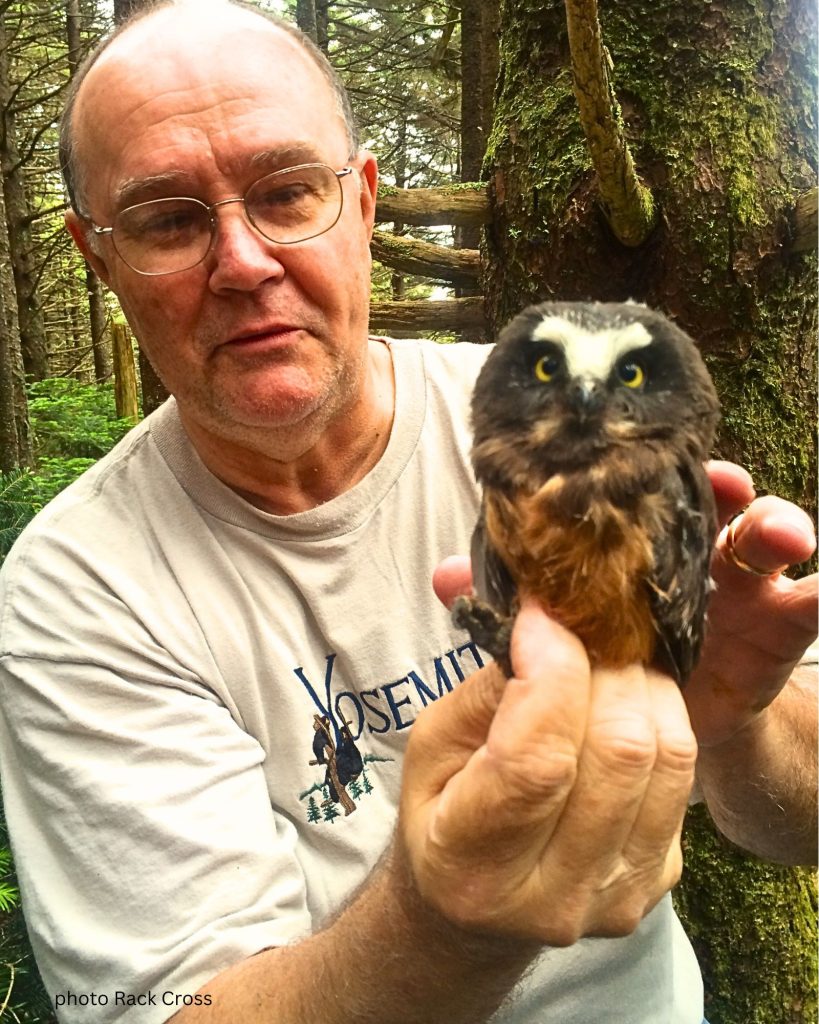
Richard banding a Saw-whet Owl
photo by Rack Cross
Richard at his Banding Station
Photo by Michele Sparks
BBC 2024 Birder of the Year - Kera Brewster
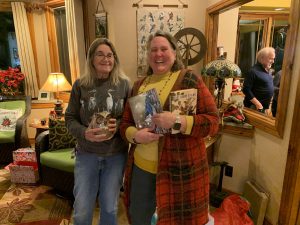
BBC 2024 Most Improved Birder and Birder of the Year - Mel Kelley and Kera Brewster
2024 BBC Birder of the Year and Most Improved Birder
by Larry McDaniel
Kera Brewster was the very deserving recipient of the birder of the year award. Kera and her husband George opened the Wild Birds Unlimited store in Johnson City. It has been a successful endeavor and has served the birding community greatly. Debi Campbell gave an amazing and emotional presentation that was a moment to be remembered.
The most improved birder award went to the equally deserving recipient Mel Kelley. Mel talked about leading the efforts of habitat restoration at a number of important birding locations in the area, most notably Jacob’s Nature Park in Johnson City, TN.
Past Field Trip Reports
Field Report – Burke’s Garden 12/13/25
by Joe McGuinness
Results of the Burke’s Garden Field Trip
December 13, 2025
Nine members of the Lee and Lois Herndon Chapter and Bristol Chapter of the Tennessee Ornithological Society participated in a field trip to Burke’s Garden, Virginia on December 13, 2025.
Weather for the trip consisted of bright sunshine and thin clouds with temperatures ranging from 24-45°F. Winds were light in the morning but picked up in the afternoon to 5-15mph. We ate lunch at the General Store. Mattie’s was closed and the bird feeders taken down.
A total of 38 species were observed :
Snow Goose -2 Belted Kingfisher – 3 Eastern Bluebird – 1 Canada Goose -47 Red-headed Woodpecker – 3 American Robin- 1 Gadwall – 8 Red-bellied Woodpecker – 3 House Sparrow- 27 Mallard – 2 Northern Flicker – 1 American Goldfinch – 2 Northern Pintail – 1 Downy Woodpecker -1 Dark-eyed Junco – 11 Wild Turkey – 2 American Kestrel – 6 Song Sparrow – 5 Rock Pigeon – 61 Loggerhead Shrike – 1 Eastern Meadowlark – 11 Mourning Dove – 11 Blue Jay – 11 Northern Cardinal – 3 Great Blue Heron – 1 American Crow – 46 Turkey Vulture -1 Common Raven – 6 Golden Eagle – 2 Carolina Chickadee – 2 Sharp-shinned Hawk – 1 Tufted Titmouse – 3 Bald Eagle -1 White Breasted Nuthatch – 2 Red-shouldered Hawk – 2 Carolina Wren – 1 Red-tailed Hawk – 9 European Starling – 67
Participants: Roy Knispel, Rob Biller, Larry McDaniel, Harry Norman, Vern Maddux, Jennifer Quillen, Rob Armistead and his sister Audrey, and Joe McGuiness
Special thanks to those who drove and to Roy Knispel for keeping up with Ebird lists for the trip! Thanks to everyone who participated!
Joe McGuiness
Report for BBC Field Trip to Shady Valley on 10-19-25
by Larry McDaniel
Eleven birders from the Bristol Bird Club and the High-Country Audubon Society turned out for a joint field trip to Shady Valley on Sunday, Oct 19. It was a good outing on a pleasant morning, and we had 34 species of birds at Orchard Bog. Some notable birds include 8 Wild Turkeys, 1 Red-shouldered Hawk, 1 American Kestrel, 1 Blue-headed Vireo, 3 Common Ravens, 3 Ruby-crowned Kinglets, 1 Northern House Wren, 1 Hermit Thrush, 25 Cedar Waxwings, 2 Field Sparrows, 2 White-throated Sparrows, 1 Swamp Sparrow, 1 Black-throated Blue Warbler and 5 Yellow-rumped Warblers.
The camaraderie was excellent. Those attending were Rick Knight (co-leader), Rob Biller, Guy McGrane, Arlene McGrane, Debbie Shetterly, Jimmy Shetterly, John McFarland, Karen McFarland, David Kirschke, Patty Kirschke and me (co-leader).
Six of us stopped for lunch in Shady Valley. From there, David and Patty went to the Schoolyard Springs and found a Lincoln’s Sparrow and a bunch of Yellow-rumped Warblers. Rick and I stopped by Musick’s Campground and found 6 Greater Yellowlegs, a Bald Eagle and a Double-crested Cormorant.
Larry McDaniel
Saltville Well Fields – BBC 10-5-25
by Rob Biller
Oct 5, 2025 8:00 AM – 12:00 PM
48 species
Canada Goose 30, Mallard 3, Rock Pigeon (Feral Pigeon) 8, Chimney Swift 2, Virginia Rail 1, Killdeer 1, Spotted Sandpiper 1 (No Spots), Green Heron 2, Great Egret 4, Great Blue Heron 1, Black Vulture X, Turkey Vulture 10, Bald Eagle 1, Belted Kingfisher 1, Red-bellied Woodpecker 1, Downy Woodpecker 1, Hairy Woodpecker 1, Pileated Woodpecker 1, Northern Flicker 1, Eastern Wood-Pewee 1, Eastern Phoebe 1, White-eyed Vireo 1, Blue Jay 12, American Crow 15, Common Raven 1, Carolina Chickadee 1, Tufted Titmouse 1, White-breasted Nuthatch 1, Carolina Wren 5, Gray Catbird 2, Brown Thrasher 2, Northern Mockingbird 2, Eastern Bluebird 3, Swainson’s Thrush 1, American Robin 1, American Goldfinch 4, Song Sparrow 5, Red-winged Blackbird 48, Prothonotary Warbler 1 (Late migrant. 2nd day in a row it was located. Has a missing/damaged eye), Tennessee Warbler 1, American Redstart 1, Cape May Warbler 2, Bay-breasted Warbler 3, Chestnut-sided Warbler 1, Yellow-rumped Warbler 1, Black-throated Green Warbler 1, Northern Cardinal 5, Indigo Bunting 2
Report from Whitetop Mountain, VA – Summer Mountain Birding Field Trip Pt 1
by Larry McDaniel
On Saturday, June 21, nine birders met at the parking area for the Elk Garden TrailHead at the foot of Whitetop Mountain in Grayson County, VA. This has been a nearly annual Bristol Bird Club event for close to 30 years. It was a gorgeous day to be on the mountain.
Report from Roan Mountain, TN – Summer Mountain Birding Field Trip Pt 2
by Larry McDaniel
Results of the Shady Valley, TN Spring Trip
by Rob Biller
Results of the Shady Valley, TN Spring Trip
by Rob Biller
Lots of Fun at the BBC Picnic!
by Larry McDaniel
Successful Bird Walk at Jacob’s Nature Park – 9-22-25
by Rob Biller
Sept 22, 2025
Eight people attended the BBC Walk around Jacob’s Nature Park (in Johnson City) from 5-7 on Monday evening. We found 31 species of birds with 11 migrating warbler species.
Those who attended were:
Robin Conway
Jennifer quinn
David Kirschke
Jack kinkade
Larry McDaniel
Karl Schneck
Harry Farthing
Rob Biller
Full bird list:
Common Nighthawk 4
Chimney Swift 3
Ruby-throated Hummingbird 1
Black Vulture 2
Turkey Vulture 2
Red-bellied Woodpecker 2
Downy Woodpecker 3
White-eyed Vireo 1
Blue Jay 6
American Crow 10
Carolina Chickadee 4
Tufted Titmouse 3
White-breasted Nuthatch 1
Blue-gray Gnatcatcher 1
Carolina Wren 8
Eastern Bluebird 1
Swainson’s Thrush 1
American Robin 5
Cedar Waxwing 10
American Goldfinch 4
Northern Waterthrush 1
Black-and-white Warbler 2
Tennessee Warbler 7
Hooded Warbler 1
American Redstart 2
Cape May Warbler 5
Northern Parula 1
Magnolia Warbler 3
Bay-breasted Warbler 1
Chestnut-sided Warbler 4
Northern Cardinal 5
Thanks to all who came. Was a great couple hours.
Rob
BBC Waterfowl Outing Field Report
by Larry McDaniel
February 1, 2025
Six people turned out for the BBC field trip to local birding hot spots on Saturday, Feb 1. We started at the weir dam on South Holston River and the top of South Holston Dam, where we had American Wigeons, Buffleheads, Ruddy Duck, Ring-billed Gulls (245 flying over). At Musick’s Campground we found 6 Pied-billed Grebes and 3 Common Loons.
At the well fields in Saltville there were Gadwalls, American Wigeons, Green-winged Teals, Ring-necked Duck, Greater Scaup, Bufflehead, Hooded Mergansers, American Coots, Common Raven, Purple Finches and Swamp Sparrows.
There was off and on cold drizzle during the morning but all in all it was a very good day of birding with delightful company.
Larry McDaniel
Western Washington County Field Trip Report
by Rob Biller
Results of the Burke’s Garden Field Trip
by Joe McGuinness
March 8, 2025
Fourteen members of the Lee and Lois Herndon Chapter and Bristol Chapter of the Tennessee Ornithological Society participated in a field trip to Burke’s Garden, Virginia on March 8, 2025. Weather for the trip consisted of a mixture of rain, sleet, and snow in the morning and partly sunny skies in the afternoon. Temperatures ranged between 36-39°F and winds were 8-15mph with some higher gusts at times. We ate lunch at the General Store and checked in on Mattie, who hopes to reopen soon. A total of 45 species were observed including Greater Scaup, Redhead, Red-headed woodpeckers, Wilson’s Snipe, and Bald Eagles. Here is the list of species identified. Numbers are from the ebird report. These numbers may vary for each observer.
Canada Geese -73, Belted Kingfisher -1, Northern Mockingbird – 1, Mallard -13, Red-headed Woodpecker – 2, Eastern Bluebird – 31, Redhead – 1, Red-bellied Woodpecker – 2, American Robin- 60, Ring-necked Duck – 17, Downy Woodpecker -4, House Sparrow- 3, Greater Scaup – 30, Hairy Woodpecker – 2, House Finch – 12, Rock Pigeon – 5, Pileated Woodpecker -1, American Goldfinch – 4, Mourning Dove – 14, Northern Flicker – 2, Dark-eyed Junco – 21, Killdeer -16, American Kestrel – 6, Song Sparrow – 11, Wilson’s Snipe -9, Blue Jay – 5, Eastern Meadowlark – 6, Great Blue Heron – 3, American Crow – 132, Red-winged Blackbird – 157, Black Vulture – 4, Common Raven – 4, Brown-headed Cowbird – 3, Turkey Vulture – 63, Carolina Chickadee – 3, Common Grackle – 22, Sharp-shinned Hawk – 1, Tufted Titmouse – 7, Cooper’s Hawk – 1, White Breasted Nuthatch – 3, Bald Eagle -2, Carolina Wren – 2, Red-tailed Hawk – 10, European Starling – 732,
Participants: Eric Middlemas, Roy Knispel, Tom Blevins, Rob Biller, David Irick, Connie Irick, George Bridwell, Belinda Bridwell, Karen McCormack, Laurie Cerra, Karen Hampton, Sue Biggs, Brookie Potter and Joe McGuiness
Special thanks to those who drove and to Roy Knispel for keeping up with Ebird lists for the trip! Thanks to everyone who participated!
Joe McGuiness
Results of the Unaka Mountain Field Trip
by Joe McGuinness
May 10, 2025
Eleven members of the Lee and Lois Herndon Chapter and Bristol Chapter of the Tennessee Ornithological Society participated in a field trip to Unaka Mountain in Unicoi County, Tennessee on May 10, 2025. Weather for the trip consisted of sun and high thin clouds, light winds, and temperatures between 42-60°F. We met at the Forest Service office in Unicoi, Tennessee at 8am and returned to the same location at 12:50pm. We made stops at Limestone Cove Recreation Area, Stamping Ground Ridge, Unaka Mountain Overlook, Beauty Spot and several locations along Unaka Mountain Road. A total of 48 species were observed including Swainson’s Warbler, Blackburnian Warbler, Magnolia Warbler, Hooded Warbler, and Pine Siskins. Here is the list of species identified.
Numbers are from the eBird report by Roy Knispel.
These numbers may vary for each observer.
Rock Pigeon – 2, European Starling – 3, Louisiana Waterthrush – 3, Turkey Vulture -1, Northern Mockingbird – 2, Black-and-white Warbler – 6, Broad-winged Hawk – 1, Veery – 3, Swainson’s Warbler- 5, Red-bellied Woodpecker – 1, Wood Thrush -2, Common Yellowthroat- 1, Downy Woodpecker – 1, American Robin – 5, Hooded Warbler – 12, Pileated Woodpecker – 1, House Finch -1, Northern Parula – 3, Eastern Wood Pewee – 1, Pine Siskin – 4, Magnolia Warbler – 1, Acadian Flycatcher -3, American Goldfinch – 3, Blackburnian Warbler – 1, Least Flycatcher -4, Chipping Sparrow – 3, Chestnut-sided Warbler – 1, Eastern Phoebe – 3, Dark-eyed Junco – 4, Black-throated Blue Warbler – 15, Blue-headed Vireo – 9, Song Sparrow – 4, Yellow-throated Warbler – 1, Red-eyed Vireo – 8, Eastern Towhee – 6, Black-throated Green Warbler–15, American Crow – 4, Brown-headed Cowbird –1, Canada Warbler – 16, Carolina Chickadee – 3, Common Grackle – 1, Northern Cardinal – 1, Tufted Titmouse -1, Ovenbird – 10, Rose-breasted Grosbeak – 2, Red-breasted Nuthatch – 5, Worm-eating Warbler – 1, and Indigo Bunting – 3
Participants: Roy Knispel, Rob Biller, Karl Schneck, Chris Soto, Rex Whitfield, Dave Gardner, Dale Ledford, Susan Peters, Kim Stroud, Marie Bradford, and Joe McGuiness.
Special thanks to those who drove (Chris, Dave, and Rob), and to Roy Knispel for keeping up with eBird lists for the trip! Thanks to everyone who participated!
BBC Outing to Orchard Bog in Shady Valley, TN
by Rob Biller
October 26, 2024
Seven birders gathered at Orchard Bog in Shady Valley (Johnson County) in anticipation of a great day. We were not disappointed.
We tallied a total of 40 species – 8 species of Sparrows, 3 species of Warblers and other common, migratory, and winter returning birds. Highlights include – Lincoln’s Sparrow, multiple singing Fox Sparrows, singing Savannah Sparrows, Orange-crowned Warbler, Palm Warblers, many Yellow-rumped Warblers, Northern Harrier, Red-Shouldered Hawk, Virginia Rail, Winter Wrens, Hermit Thrushes, and Ruby-crowned Kinglets.
After lunch, Larry McDaniel and myself found a Peregrine Falcon zooming past the 4-way “cross-roads” intersection heading towards Cross Mountain.
It was a wonderfully fun day and many thanks to everyone that showed up and contributed to a very memorable day:
Roy Knispel, Larry McDaniel, Judy Moose, Cathy Spencer, Jennifer Quinn, Lynn Eastin, Rob Biller
Complete list follows:
Wild Turkey 1, Virginia Rail 1, Wilson’s Snipe 1, Great Blue Heron 1, Turkey Vulture 3, Northern Harrier 1, Red-shouldered Hawk 1, Red-bellied Woodpecker 1, Downy Woodpecker 2, Pileated Woodpecker 1, Northern Flicker 3, Peregrine Falcon 1, American Kestrel 1, Eastern Phoebe 2, Blue Jay 15, American Crow 21, Common Raven 2, Carolina Chickadee 6, Ruby-crowned Kinglet 2, White-breasted Nuthatch 1, Winter Wren 3, Carolina Wren 4, European Starling 4, Northern Mockingbird 2, Eastern Bluebird 17, Hermit Thrush 3, Cedar Waxwing 20, American Goldfinch 15, Field Sparrow 5, Fox Sparrow 4, White-throated Sparrow 5, Savannah Sparrow 3, Song Sparrow 8, Lincoln’s Sparrow 1, Swamp Sparrow 4, Eastern Towhee 1, Red-winged Blackbird 65, Orange-crowned Warbler 1, Palm Warbler 6, Yellow-rumped Warbler 15, Northern Cardinal 4
BBC Waterfowl Outing Field Report
by Rob Biller
November 23, 2024
The Bristol Bird Club had a birding outing on Saturday, November 23, 2024. Larry McDaniel and I (Rob Biller) were joined by Jesse and Sarah Honeycutt, Nicholas Dingus, Linda Maulton, Jennifer Quinn, and Tom Blevins and we had a most excellent day. This was billed as a waterfowl trip but we also had some other good sightings.
We started at the Weir Dam/South Holston Dam complex. The usual contingent of wintering Buffleheads and American Wigeons were on the river just above the weir. There were three Great Blue Herons scattered in different places along the Holston River. Other birds found along the river include Yellow-bellied Sapsucker (2), Brown Creeper (calling), Common Raven (2), Yellow-rumped Warbler (6), and other more common birds listed below. At the top of the South Holston Dam there were a large number of Common Loons (45) that had apparently dropped in as the cold front that brought a little snow moved through on Thursday night into Friday. There was also a raft of ducks so far out that we could not identify them but marveled as we watched an adult Bald Eagle dive and make multiple attempts to capture one! Also over the lake were a large group of Ring-billed Gulls (41).
Our next stop was the shallow waters of South Holston Lake at Musick’s Campground. On the way into Musick’s Campground there was an American Kestrel on an electrical wire. There was also an adult Bald Eagle sitting in the tree where the known eagle nest looks to be used again in their coming nesting cycle. On the lake from the campground shore we found another group of Common Loons (8), Ring-billed Gulls (9), Bonaparte’s Gulls (9), American Coots (25). Pied-billed Grebes (2), and a Red-tailed Hawk.
Our last stop was the Well Field Ponds in Saltville, Virginia. This was a bit of a drive but it was well worth it. The waterfowl did not disappoint as we had great looks at Northern Shovelers (2), American Wigeons (13), Mallards (2), Ring-necked Ducks (6), Lesser Scaups (43), Hooded Mergansers (16), and Ruddy Ducks (3). As we were walking back to where we parked, we spotted Bob Riggs and met birding partner Elaine. While we were catching up with Bob, Elaine interrupted us by telling us to look up. While we were looking at the Red-tailed Hawk she had found, we then noticed two Peregrine Falcons rising up above the Red-tail and a Turkey Vulture that had drifted in. We watched in awe as one Peregrine Falcon dove on the Red-tail and the other dove on the Turkey Vulture. At one point we were able to track both Peregrine Falcons at the same time with Larry’s scope. Other good birds we had in Saltville were Great Egret (1), Ruby-crowned Kinglet (1), Hermit Thrushes (6), Yellow-rumped Warblers (2), and other common birds listed below. Our grand finale for the day was getting a Virginia Rail to respond to its call in the marshy area of one of the wellfield ponds.
It was really nice to see Bob Riggs, and meet Elaine, as it had been too long. Bob used to be a member of the Bristol Bird Club and is an outstanding birder. It was really a good day.
Complete Lists for Weir Dam / South Holston Dam and Saltville Well Fields Ponds:
Weir / South Holston Dam, Sullivan County
Nov 23, 2024
18 species
American Wigeon 17, Mallard 8, Bufflehead 63, Ring-billed Gull 41, Common Loon 45, Great Blue Heron 3, Bald Eagle 1, Yellow-bellied Sapsucker 2, Pileated Woodpecker 1, Blue Jay 2, American Crow 1, Common Raven 2, White-breasted Nuthatch 1, Brown Creeper 1, Carolina Wren 1, Eastern Bluebird 2, Song Sparrow 1, Yellow-rumped Warbler 6
Saltville Well Fields, Smyth, Virginia, US
Nov 23, 2024
40 species
Canada Goose 300, Northern Shoveler 2, American Wigeon 13, Mallard 2, Ring-necked Duck 6, Lesser Scaup 43, Hooded Merganser 16, Ruddy Duck 3, Mourning Dove 2, Virginia Rail 1, American Coot 6, Pied-billed Grebe 2, Great Egret 1, Great Blue Heron 1, Black Vulture 30, Turkey Vulture 2, Red-tailed Hawk 1, Belted Kingfisher 1, Red-bellied Woodpecker 1, Downy Woodpecker 1, Peregrine Falcon 2, Blue Jay 3, American Crow 6, Carolina Chickadee 3, Tufted Titmouse 4, Ruby-crowned Kinglet 1, White-breasted Nuthatch 1, Carolina Wren 3, European Starling 4, Northern Mockingbird 2, Eastern Bluebird 7, Hermit Thrush 6, American Robin 1, House Finch 30, American Goldfinch 3, White-throated Sparrow 6, Song Sparrow 3, Eastern Meadowlark 2, Yellow-rumped Warbler 3, Northern Cardinal 2
Historical – The Eagle and Bristol Bird Network Publications
Historical BBC “The Eagle Newsletter” Heading
Originally designed by Wallace Coffey
Easing Toward Fall Migration
by Wallace Coffey – July 10, 2015, 10:11:37pm EDT
This was originally published on Bristol Birds Network on July 10, 2015
The hot days of summer bring promise for fall migration. Thousands of shorebirds are starting to drift southward from the Arctic. Our longings for the earliest arrivals are just days away when the Spotted Sandpiper has arrived by the second week of July with the Solitary Sandpiper maybe a week or so close behind. Least Sandpipers usher in August and other species arrive faster and faster until most of the flights have flown south with colder winds by November.
While we await the rush of adrenalin, maybe we can tap our foot and assist some new birders with an orientation to the pond environs. This is the sign that a new birder and many hunters and sportsmen first discover as they drive up to the pond on the private dirt lane leading from Paddle Creek Rd. in eastern Sullivan County, TN. It’s a large sign with the pond behind it and very visible to visitor. It is just beyond the sawmill at the right of the lane.
The club has spent several years working with the farm owners to further develop and manage shorebird/wader habitat and observer opportunity at this special pond.
We have funded a daily wildlife management habitat fee for each day the water levels were managed to hold low enough drawdown levels to establish adequate habitat. Members have learned how to work with the family to make this an excellent birding site and habitat attraction for water birds of all kinds but especially shorebirds and waders.
As many may recall, on 22 Aug 2010, BBC members and the farm owners entered into a study/management project for the purpose of determining feasibility to create the maximum shorebird/wader habitat on a seasonal basis in order to attract these species as well as to provide access to view and record what might visit the pond.
The study was an in-depth project until early December 2010 to carefully recorded both the actual drawdown capability as well as habitat (mudflat) exposure. Not only were records kept but a measurable pond level was correlated with actual
habitat, dates and species attracted. The management methods and results were photographed to create a useful tool for future guidance and planning.
As a control, during the fall season of 2011, the pond was allowed to proceed as in the previous years without intentional management to get a baseline of usage by shorebirds/waders.
With managed drawdown and habitat manipulation, birders enjoyed a very productive shorebird monitoring and birding season in 2010. The unmanaged fall season of 2011 was not remarkable. Of course, actual migration numbers, weather,
fronts and prevailing winds as well as season actually determine the species available to visit the pond. Drawdown and exposed mudflat habitat have not been the sole factors for the past five years.
Now that we know more precisely how to manage the water level and subsequent shorebird habitat, we are able to implement management with the farm for the coming fall season — now thru November.
Crumley Farms Inc. leases hunting rights to several individuals who use other areas of their 684-acre holdings. However, a few days of waterfowl hunting occur in late fall and that explains the duck blind you see along the shore.
BBC opened a discussion with the owners about the possibility that birders would pay to have the pond habitat managed for shorebirds/waders during the fall period. The owners were most receptive.
The discussion centered around a rate schedule that would follow a measured drawdown to expose habitat as we needed with a daily management rate during the season for each increment of water level and exposed habitat. They would be paid based on results, not by a set fee or payment followed by an attempt to manage. The results would be to achieve pond levels and habitat exposed.
Since the pond is very shallow and especially in the upper end, a few inches of water level drawdown exposes much habitat.
Because it is essentially a pump/storage operation where water is diverted from Paddle Creek thru an underground pipe system to the pond to fill it as needed and an electric pump is controlled from a switchbox along the road leading in, water level can be lowered by pumping the water to very private and restricted ponds atop the hill on a seperately-owned track of land. Birders are never allowed to go up to the private ponds on the hill behind the top gate.
All of this provides significant control to manage the habitat both spring and fall. This management method was tried, tested and successful results observed. The pond draws a very diverse population of stopover birds and in numbers enough to make monitoring very interesting.
This takes BBC to the forefront as a bird club managing prime habitat to benefit wildlife and attract special species of interest. Among the shorebirds found have been species such as the list below and often in good numbers:
Black-bellied Plover, Semipalmated Plover, Killdeer, Spotted Sandpiper, Solitary Sandpiper, Greater Yellowlegs, Lesser Yellowlegs, Stilt Sandpiper, Sanderling, Dunlin, Least Sandpiper, White-rumped Sandpiper, Buff-breasted Sandpiper, Pectoral Sandpiper, Semipalmated Sandpiper, Western Sandpiper, Short-billed/Long-billed Dowitcher and Wilson Snipe, And Red-necked Phalarope.
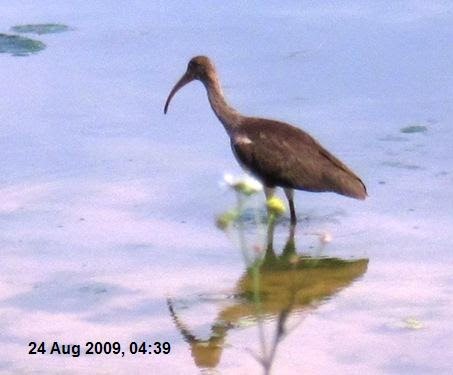
The fall season brings large flocks of Blue-winged Teals in late August and, more rarely, very interesting species of waders such as Glossy Ibis below and White Ibis ( image up and to the right).
In total, more than 400 reports of birding field trips have been made at the pond and more than 125 species listed at the site.
The pond is presently at full pool and will draw down as the heat of summer, maybe less rainfall and the dryer months of summer allow.
Among the birders known to most frequently visit the site are Roy Knispel, Ron Carrico, Reece Jamerson, Rob Biller, Tom McNeil, Cathy McNeil, Rick Knight and myself.
On 17 Jan 1999, Coffey and Knight discovered the sprawling pond below an aircraft they were in which was passing very low over the river area to survey for wintering Bald Eagles in the region. They were impressed with its size. It was a few years until
Coffey connected the Crumley family and the ponds as a regular birding site and asked permission to bird there.
Betty Crumley, one of four daughters in the family which lives in the brick house along the driveway leading back to the pond, worked with Coffey. She told him about ducks coming there and invited him to visit the pond. That was in the late 1990s. Three daughters are grown and live elsewhere. One lives on the farm and helps farm the land. One is a teacher in South Carolina, another owns an aircraft maintenance and airplane sales business at Elizabethton and another is a flight nurse aboard Mountain States’ Wings Air Rescue medical helicopters.
One of the earliest reports of birding at the site was 5 Mar 2003 when Ed Talbott, Roger Mayhorn and Coffey birded there. Two days later, Coffey and Dave Worley reported birds from the location.
In October 2006, we began to call the site Paddle Creek Pond. It seemed to have more clear identification due to the name of the road and creek along the road.
Paddle Creek Pond is at about 1480 feet elevation. It has a shoreline of approximately 1700 feet with the pond being 850 feet long and 250 feet wide. The best habitat is at the upper and most narrow end where mudflats are exposed.
Look forward to the wind birds and their fall passage.
Wallace Coffey
Bristol Bird Club
Bristol, TN
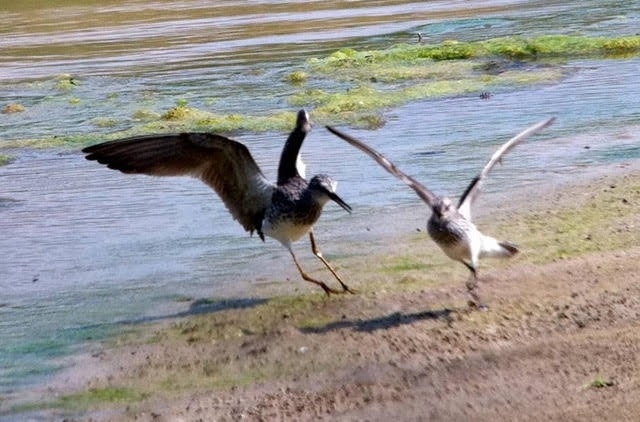
Shorebirds at Paddle Creek Pond (Sullivan County)
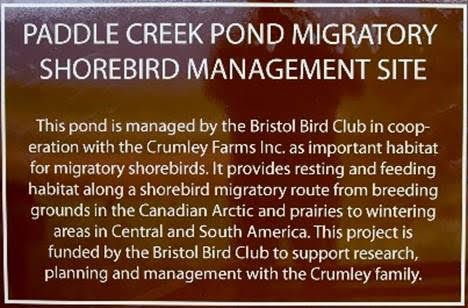
Paddle Creek Pond Sign
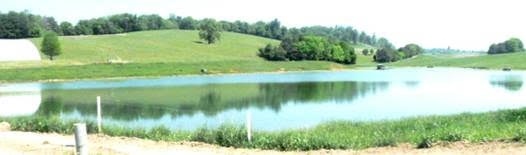
Paddle Creek Pond